

Mahalaya to Dashami · thirty-one songs
Audio plays through YouTube's embedded player. Nothing is hosted on this site, and all rights stay with the labels, composers and performers. Credits are put together from published recordings and may contain errors. If you hold rights to anything here and want it taken off, get in touch and it comes down.
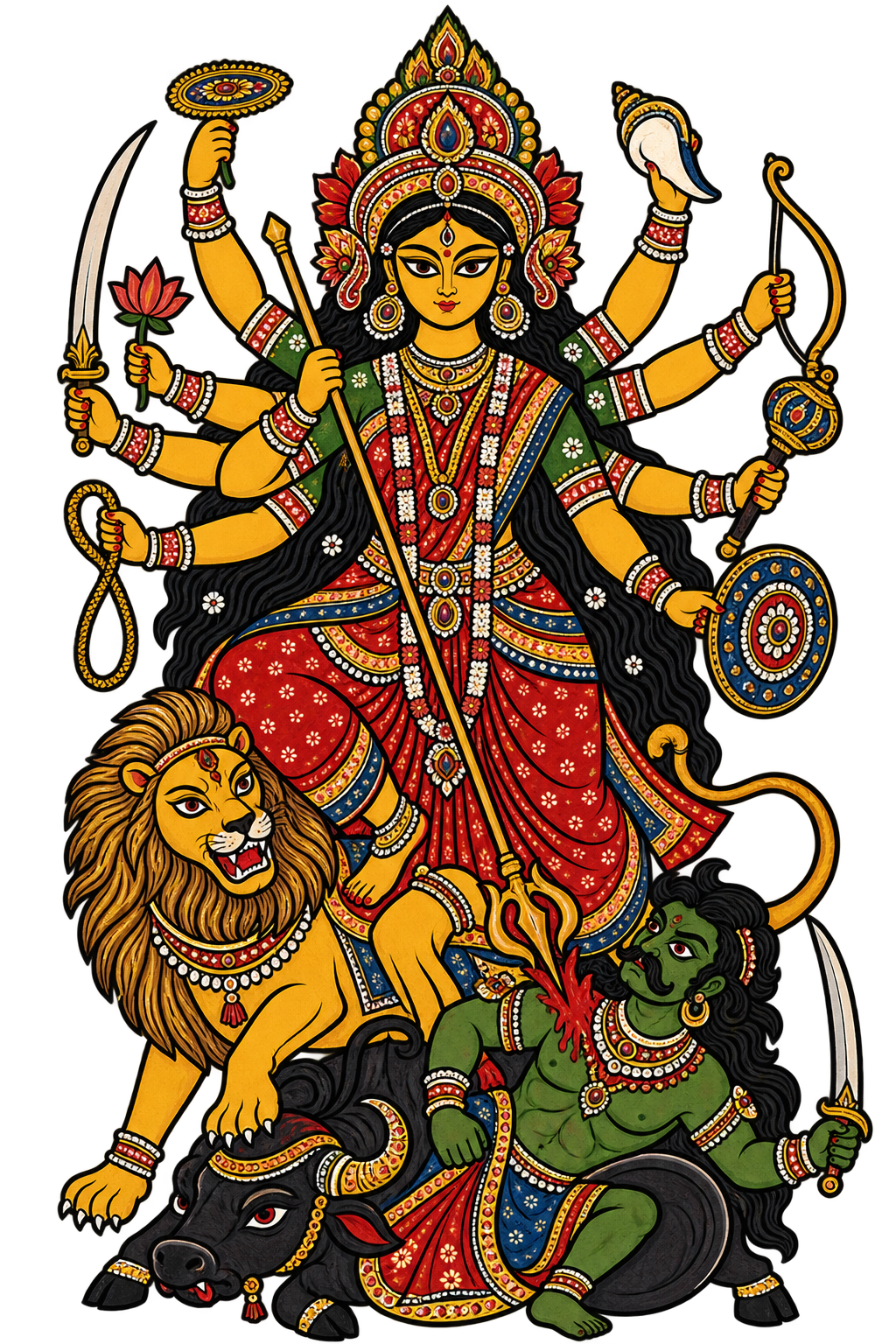
Everything you see here is drawn in Bengal Pattachitra, the scroll-painting tradition of rural Bengal. For centuries the patua families painted a story down a long cloth scroll and carried it village to village, unrolling it frame by frame and singing the tale as they went. It was cinema before cinema, and the song came with the picture.
Its rules are strict and that is the beauty of it. Heavy black brush outlines. Flat unmodulated colour from natural pigment, alta red and turmeric ochre and indigo. No shadow, no perspective, no empty space. And the long almond eye, which gives every figure the same steady unblinking gaze.
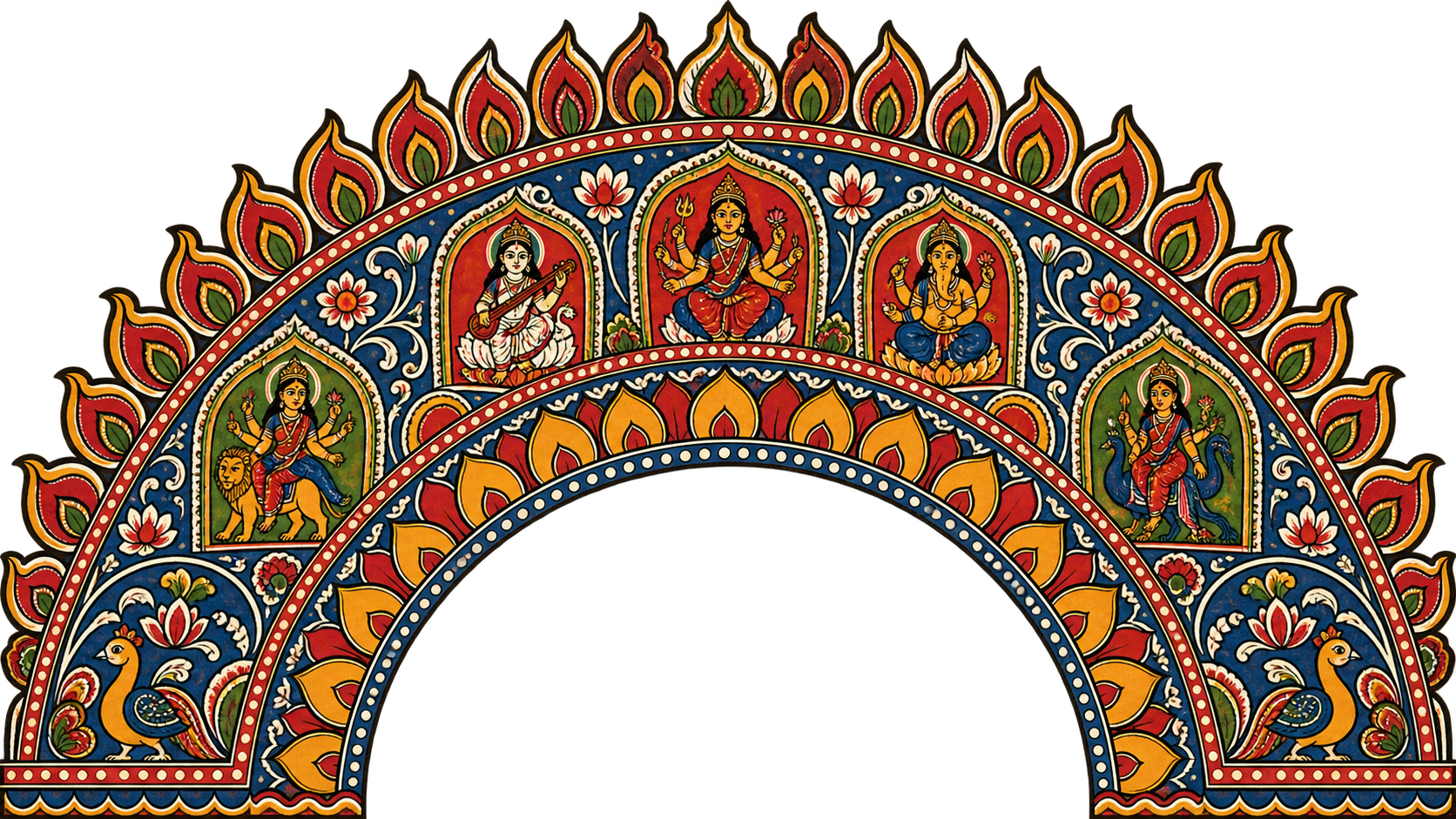
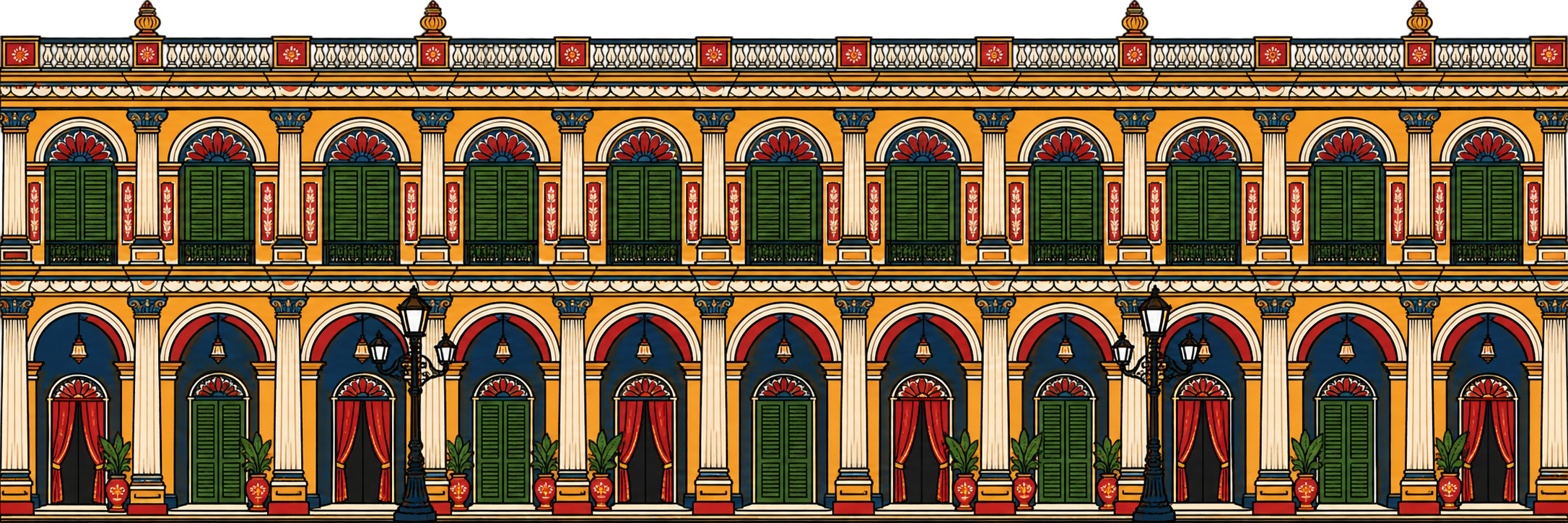
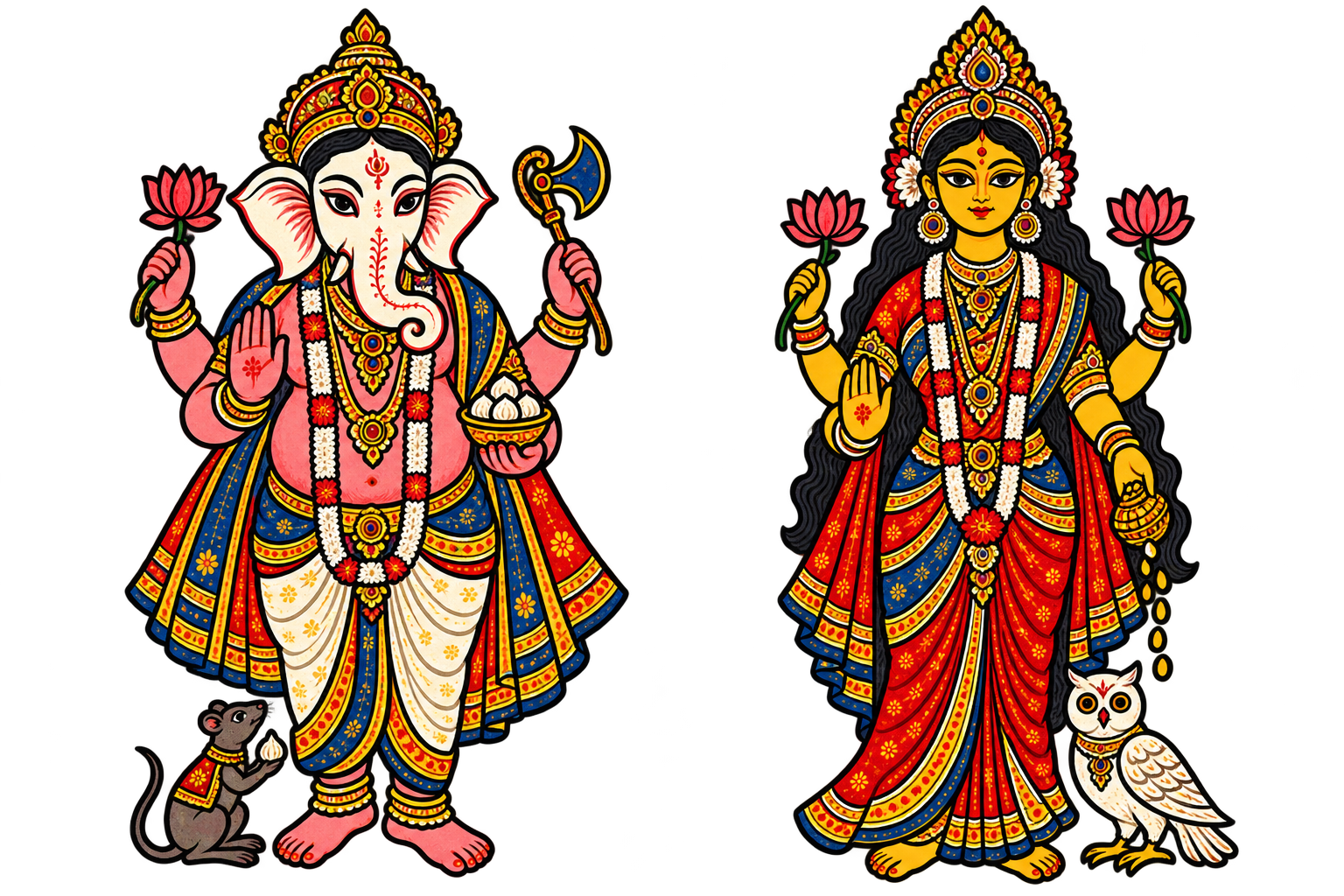
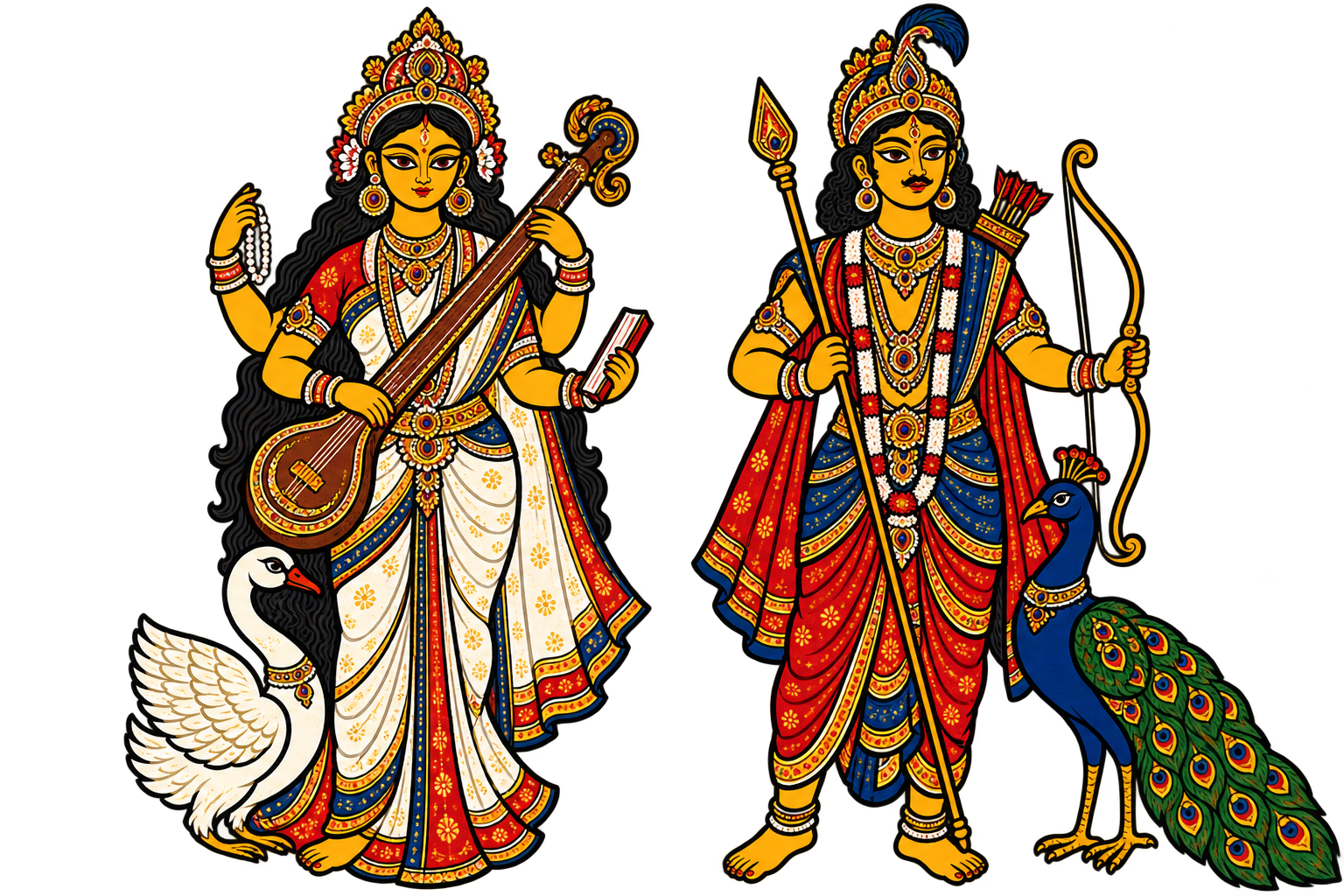
She stands in ekchala, the old single-arch arrangement: Durga at the centre driving her trident into Mahishasura, and her four children beside her under one painted backdrop, the chalchitra. Ganesh and Lakshmi to her right, Saraswati and Kartik to her left, each with their creature, the mouse and the owl and the swan and the peacock. Behind them is a thakurdalan, the courtyard of an old Bengali house where the family has installed her every autumn for generations.
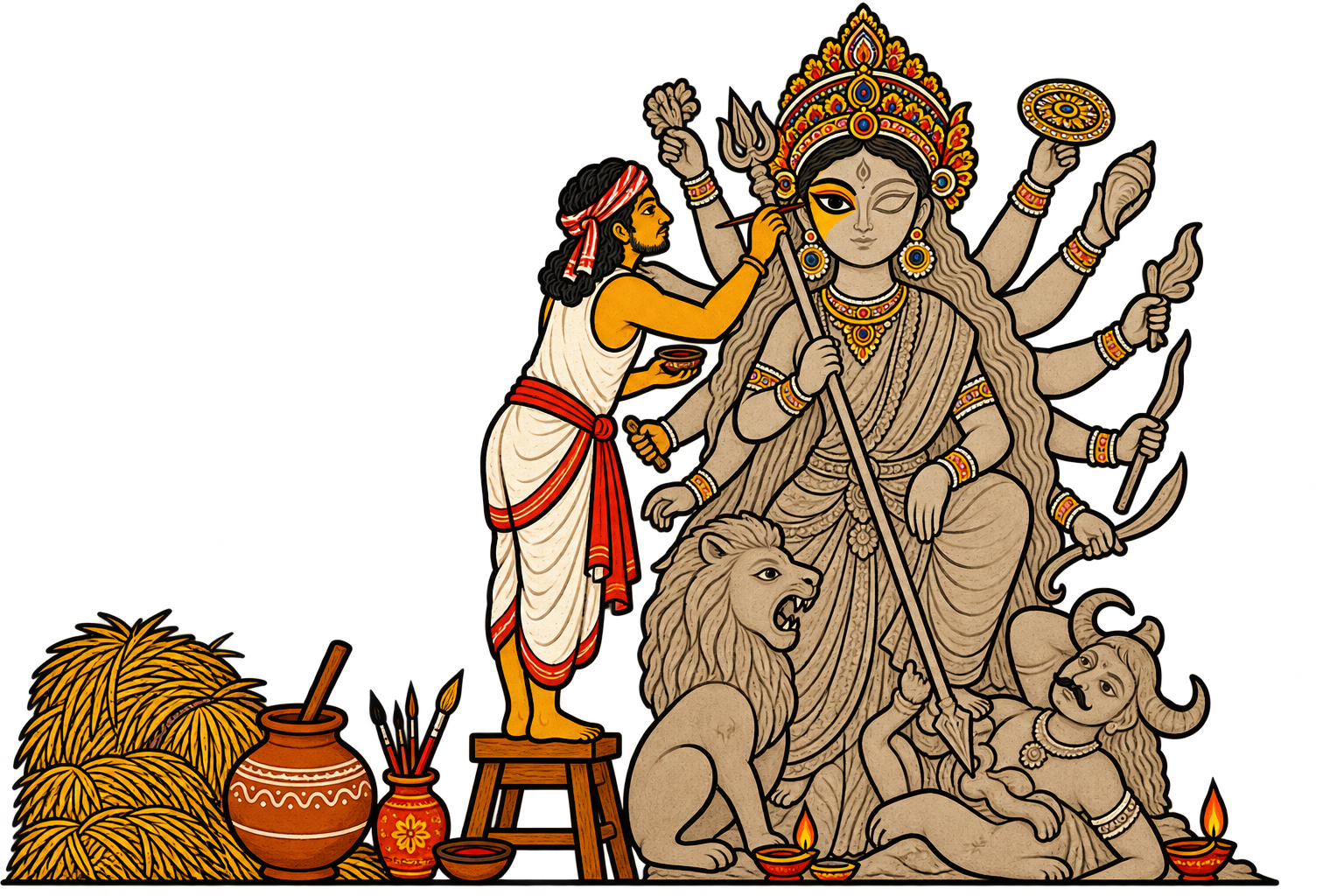
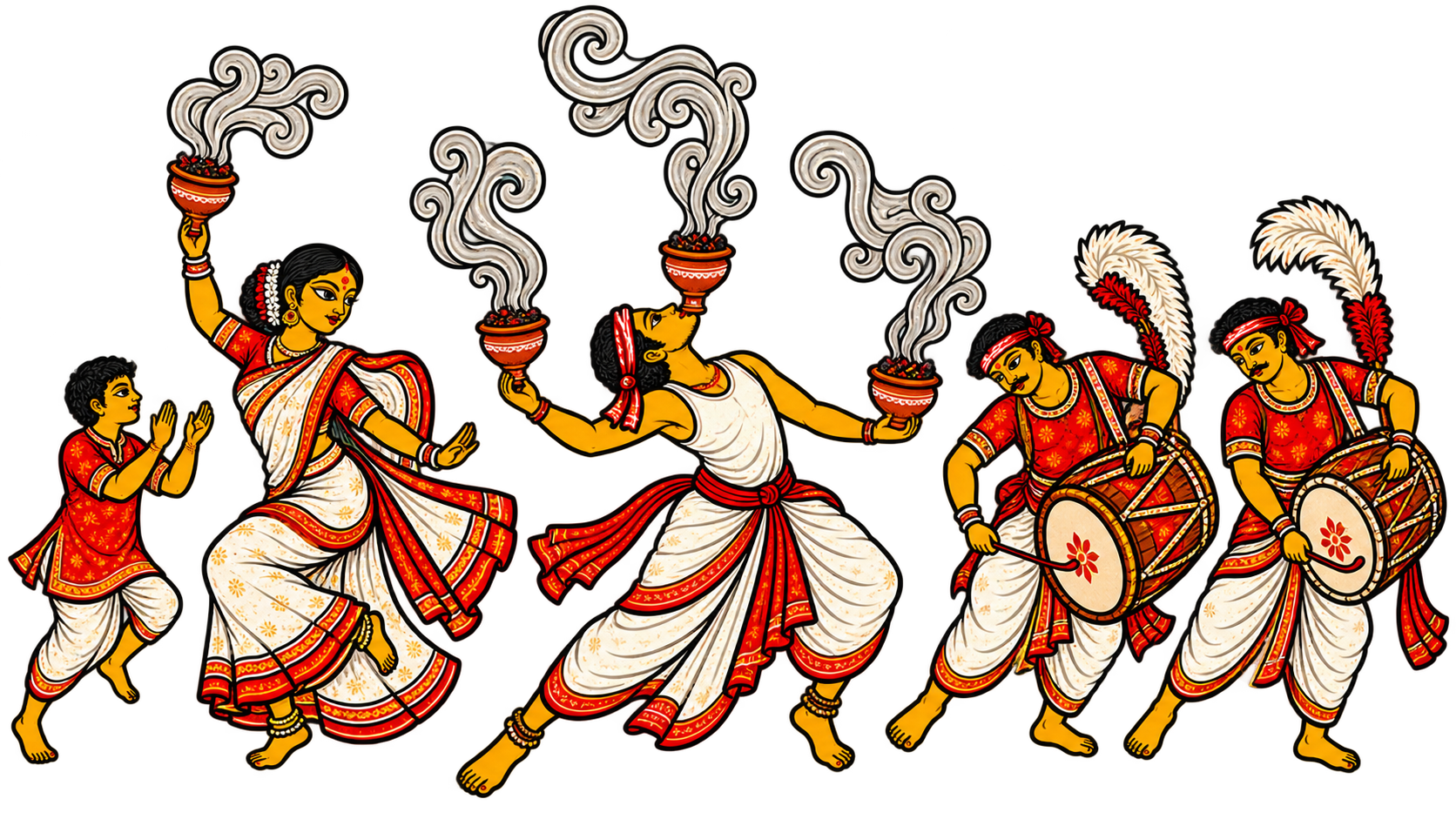
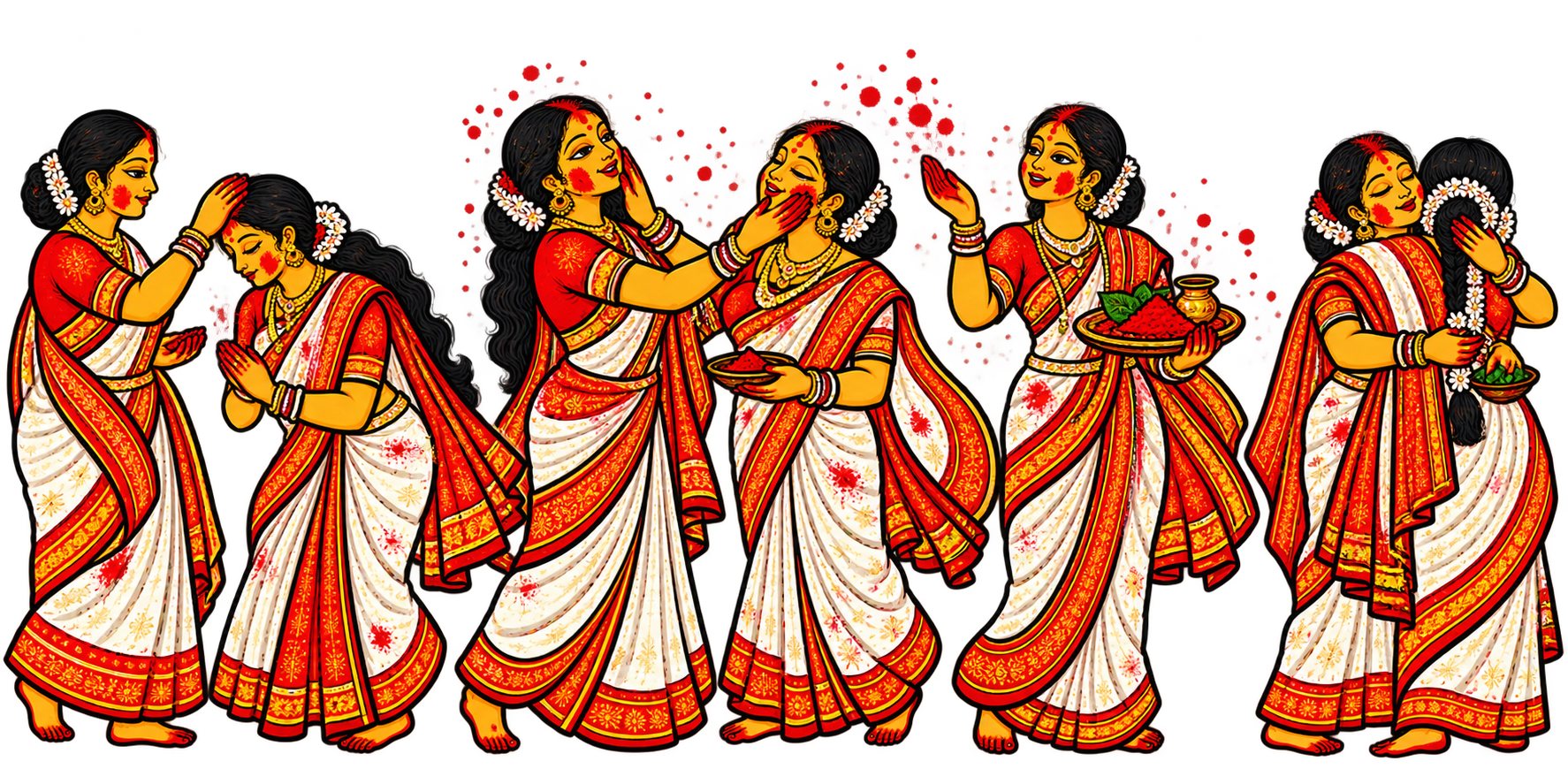
On Mahalaya, before dawn, the image-maker paints her eyes last of all and she is said to open them. That is chokkhu daan, and it is where this begins. Through Panchami to Ashtami she holds court. Navami night is danced in front of her with burning dhunuchi, censers of coconut husk and camphor, the smoke going up in coils. On Dashami the women mark each other with sindoor, and then she is carried to the river and given back to the water.
Thirty-one songs follow that arc, from the chandipath at four in the morning to the Bijoya songs at the end. Aaschhe bochhor abar hobe.
Art generated for this site in the Pattachitra idiom, and offered with respect to the patua painters whose tradition it borrows. Audio plays through YouTube; nothing is hosted here.